The Organizing Effect
How One Small Space Can Change Everything
Stress has a way of showing up in unexpected places. When life overwhelms us — whether through grief, loss, or major life changes — our physical spaces often become a reflection of our internal chaos.
Clutter isn't just about mess; it's about feeling out of control, lost, and disconnected from your own home. But here's what I've discovered through years of helping people: organizing just one small space can be the turning point that changes everything.
When Grief Left Him Without a Home.
I once worked with a client who had lost his wife. The grief was all-consuming, and with it came an inability to manage his home.
To make matters more complicated, his wife struggled with chronic disorganization, leaving him surrounded by countless items that belonged to her, to him, and to no clear purpose.
He was paralyzed — not just emotionally, but practically. He didn't have the mental bandwidth or the organizational skills to tackle the overwhelming mess around him.
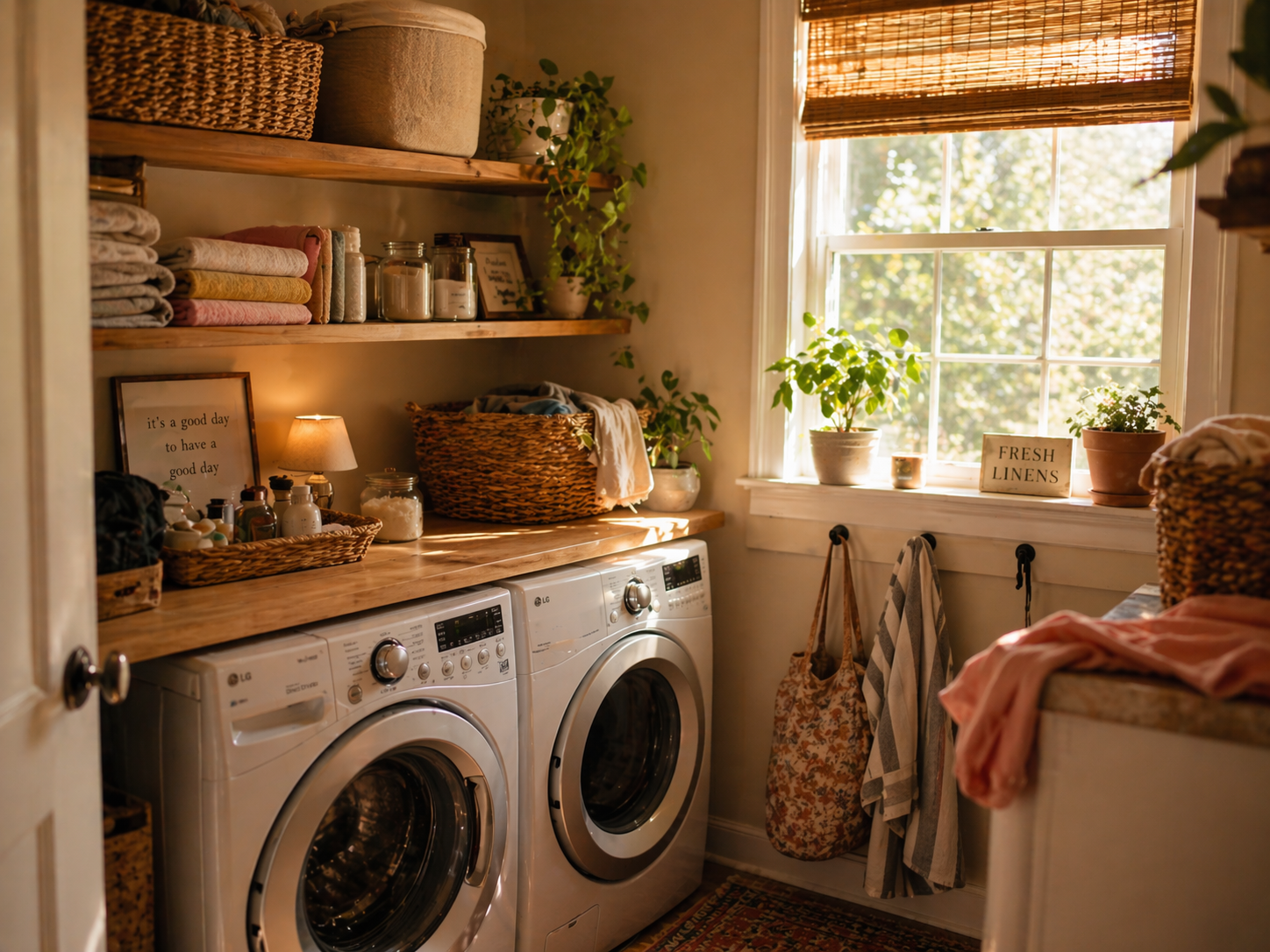
We started small. We chose his laundry room.
That single decision changed his trajectory. Once that one room was organized — once he could walk in and know exactly where things were, once the space felt predictable and structured — something shifted inside him. For the first time since losing his wife, he had a space that felt like his own. A space he could control. That one organized room became a foundation, and from there, he found the strength and motivation to organize other areas of his home. The laundry room didn't just get clean; it gave him permission to move forward.
When a Busy Family Found Their Footing.
I worked with a young family who had just purchased their first home together.
Both parents had demanding careers, and between work and raising their children, they simply didn't have the bandwidth to set up their new house in a way that actually worked for them. Their kitchen — the heart of a busy family's home — was chaos.
We started there, organizing based on function and daily use. Medications were sorted into labeled bins by category: one for adult medications and vitamins, one for children's medications, and one for prescriptions. Food storage containers, which had been stacked awkwardly in a cabinet, were moved into an easily accessible drawer. Deep cabinets that were impossible to navigate got sliding pots and pans holders installed so everything was within reach. What had felt impossible suddenly felt manageable.
The Value of Hiring a Professional Organizer.
You might think that hiring an organizer is just about getting someone to do the work for you. But that's only part of the story. When you work with a professional organizer, you're learning a skill set that extends far beyond that one space.
A good organizer teaches you how to think about your home differently — how to assess what you actually use, how to create systems based on your lifestyle and daily habits, how to maximize accessibility and function. They show you how to categorize items logically, how to measure your space and make it work for you, and how to make decisions about what stays and what goes.
Beyond the teaching aspect, hiring an organizer is also about efficiency. What might take you weeks or months to figure out on your own, an organizer can accomplish in days because of their expertise and experience. They know the best practices, the most effective systems, and how to work quickly without sacrificing quality.
More importantly, they teach you how to maintain and build on that organization yourself. You're not dependent on them forever — you're learning the skills so that you can take charge of your own home and continue organizing other spaces with confidence.
When I organize a kitchen with a client, they're not just watching me work. They're learning the principles behind every decision. Why medications go in one place, why frequently used items need to be at eye level, why accessibility matters more than aesthetics. Once they understand those principles, they can apply them to their bedroom, their bathroom, their garage. The skills they learn in that first organized space become the blueprint for organizing the rest of their home.
You Don't Need a Year-Long Project.
Here's something important: professional organizing doesn't have to be this massive, time-consuming undertaking. I've found that when I help people tackle one space thoughtfully, it creates momentum. That initial win — that one organized kitchen or laundry room — gives them confidence and energy. From there, they're able to take on more tasks themselves.
My role becomes about supporting them as they build on that foundation, not about doing everything for them.
Organizing is a process, not a destination. It starts with one space, one decision, one small victory. And from there, the momentum builds naturally.
The Power of One Small Space.
What both of these clients discovered is that organizing isn't about perfection or having the "right" systems. It's about reclaiming agency. When life is chaotic — when you're grieving, managing a new home, overwhelmed, or stressed — your physical environment can feel like yet another thing you've lost control over. But when you organize just one space, you prove to yourself that change is possible. You create a small sanctuary that says, "This is mine. This makes sense. This is manageable."
That one organized space becomes a foundation. From there, you build momentum. One laundry room leads to a bedroom. One kitchen leads to a dining area. One small win leads to another.
If you're feeling overwhelmed by clutter and chaos, you don't need to organize your entire home tomorrow. You just need to choose one small space and start there. Let that space become your proof that things can change. Because once you've organized that one room, once you've experienced how good it feels to walk into a space that's yours and makes sense, you'll find the strength and motivation to keep going.
Your home can be a reflection of peace instead of chaos. It just starts with one space at a time.